The problem is not missing words. It is facts losing their boundaries
A product page can contain the correct information and still produce a bad rewrite. The error happens when a writer combines facts from adjacent purchase options.
The Ugmonk Analog Card Bar Pro Kit in black makes a useful editing exercise. Its selector shows several purchases together. The facts are already present. This audit tests how to preserve them, not whether Ugmonk needs a longer description.
This is an independent reading of a public page on September 15, 2026. Ugmonk did not commission or approve it. No store was changed, product tested, or search improvement measured.
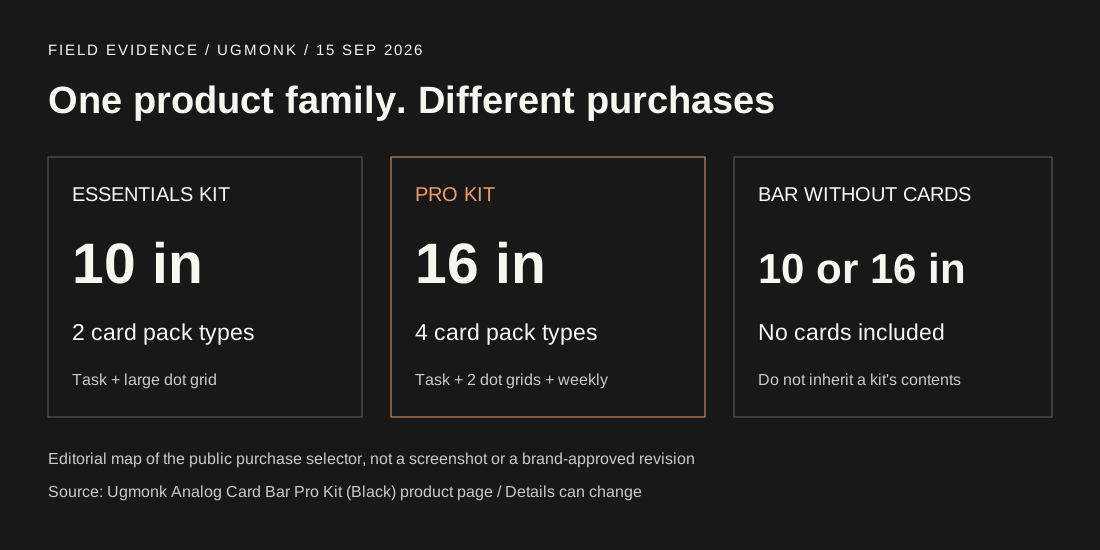
Our diagram of the public selector, checked September 15, 2026. It is not a screenshot or a customer result.
Three checks, with the source location left visible
| Check | What the inspected page says | Editing decision |
|---|---|---|
| Purchase identity, in Select Kit | Essentials: 10-inch bar, two card pack types. Pro: 16-inch bar, four types. Standalone bars: no cards | State the selected kit before its contents; do not merge alternatives |
| Size, in What's Included | Pro bar: 16 × 1.8 × .63 inches | Attach dimensions to the bar, not to the cards or the entire family |
| Return conditions, in Shipping & Returns | 30 days from delivery; used or non-original-condition returns may incur a 15% restocking fee | Keep the condition beside the return window |
For each row, open the named section on the linked source. If the page has changed, use the current record rather than this capture. A product name alone is not a sufficiently precise source identifier.
A shorter replacement must not become a different offer
Here is a deliberately narrow editorial example for the selected Pro Kit:
The black Pro Kit includes a 16-inch Card Bar and one pack each of Small Task, Small Dot Grid, Large Dot Grid and Weekly Cards. Bar dimensions: 16 × 1.8 × .63 inches. Essentials and standalone-bar purchases have different contents.
This is proposed text, not Ugmonk's published wording. It belongs near the selected purchase and contents section, not as a claim about every option in the family.
A separate return answer must retain the fee condition. Do not compress the source into “free returns” or “risk-free trial”; neither follows from the inspected terms.
There is also no need to turn a pack count into a card count. The kit contents section lists packs. If you need the number of individual cards, confirm it from the appropriate current card-pack record before adding it.
The negative control: reject a smooth sentence
Try this deliberately incorrect test sentence:
Every Card Bar purchase comes with the same cards and unconditional returns.
Reject it before considering tone. It changes purchase scope and removes a condition. An editor who only checks spelling or whether a sentence sounds useful can miss both changes.
During our internal QA, a draft for a different product passed automated review but asserted that the brand had not independently verified its claims. The supplied material did not establish that. We discarded that internal result before purchase and added a guard against verification commentary in replacement copy.
That is a limit of automated review, not a success-rate claim. “We did not find documentation” does not mean “the manufacturer never verified it.” Keep unresolved questions in an owner checklist rather than turning them into published product assertions.
Copy this brief before asking for a rewrite
Use it for one purchase option at a time. The blank fields are for your own product, not missing data in the audit above.
Selected product URL and option:
Source checked on:
Question the customer needs answered:
Approved fact and exact source section:
Other option this fact must NOT describe:
Condition or exception that must stay beside it:
Proposed customer-facing answer:
Unresolved question for the page owner:
In the first pass, write only what you can support. In the second, compare every number, included item, and condition against the selected purchase. A source link at the end does not repair a sentence that says something else.
If the existing page already answers the question clearly, leave it alone. The purpose is to prevent an incorrect purchase expectation, not to manufacture a rewrite for every paragraph.
What to check after an approved edit
- Select a different kit and confirm its displayed answer changes appropriately, or that the shared copy names each option explicitly
- Check the saved page on a phone as well as a desktop; inspect accordions and any cart summary separately
- Compare current product records with visible text before changing structured data or feed fields
- Record the publication date and later customer questions separately from search impressions and sales
This audit does not establish how ChatGPT retrieves this page, whether it cites Ugmonk, or whether any rewrite increases sales. Google says its AI search features use the same foundational SEO requirements, with no additional technical requirement for inclusion.
For the broader placement decision, read product page versus blog. If you want to inspect an automated suggestion for a page you own, start with a free preview. Check its facts before using it; a model passing its own review is not a human fact-check.
TRY YOUR OWN PAGE
See a real change before you pay
Submit a public product page you own or may use. Preview one AI-generated change free; the complete digital rewrite is $149. No human review or store changes.