Day 2. What customer question should your brand answer first?
Customers aren't looking for a product—they're looking for an answer to their problem.
Let's start with this scene today
When you start building content for your DTC site, it's tempting to think, "Let's explain our bestseller better first." That can be a fine starting point. But customers often don't start by thinking of a product name.
They start from their own situation: "Can I use this every day even with sensitive skin?" "What's a good set for a gift?" "What flavor is easiest for a first-time buyer?"
The questions people ask AI work the same way. AI tries to answer the customer's question, and our job is to prepare the information that becomes that answer. Today, let's find the one customer question your brand should answer first.
Why does the customer ask this question?
What makes your customers hesitate?
Pick whichever of these is closest to your brand and open it up.
- Recent customer inquiries or support logs
- Reviews for your flagship product
- Instagram/community comments or DMs
- Questions you often hear from first-time visitors to your product page
Find one question in there that's written in the customer's own words. It's fine if it doesn't mention a product name—a question phrased in the customer's own words is often a better starting point.
When choosing a question, check these three things:
- Does this question help someone who's hesitating right before purchase?
- Can your brand answer it with verified facts?
- Is there a product or page you can naturally link to after the answer?
Real example: pre-purchase questions a brand has compiled
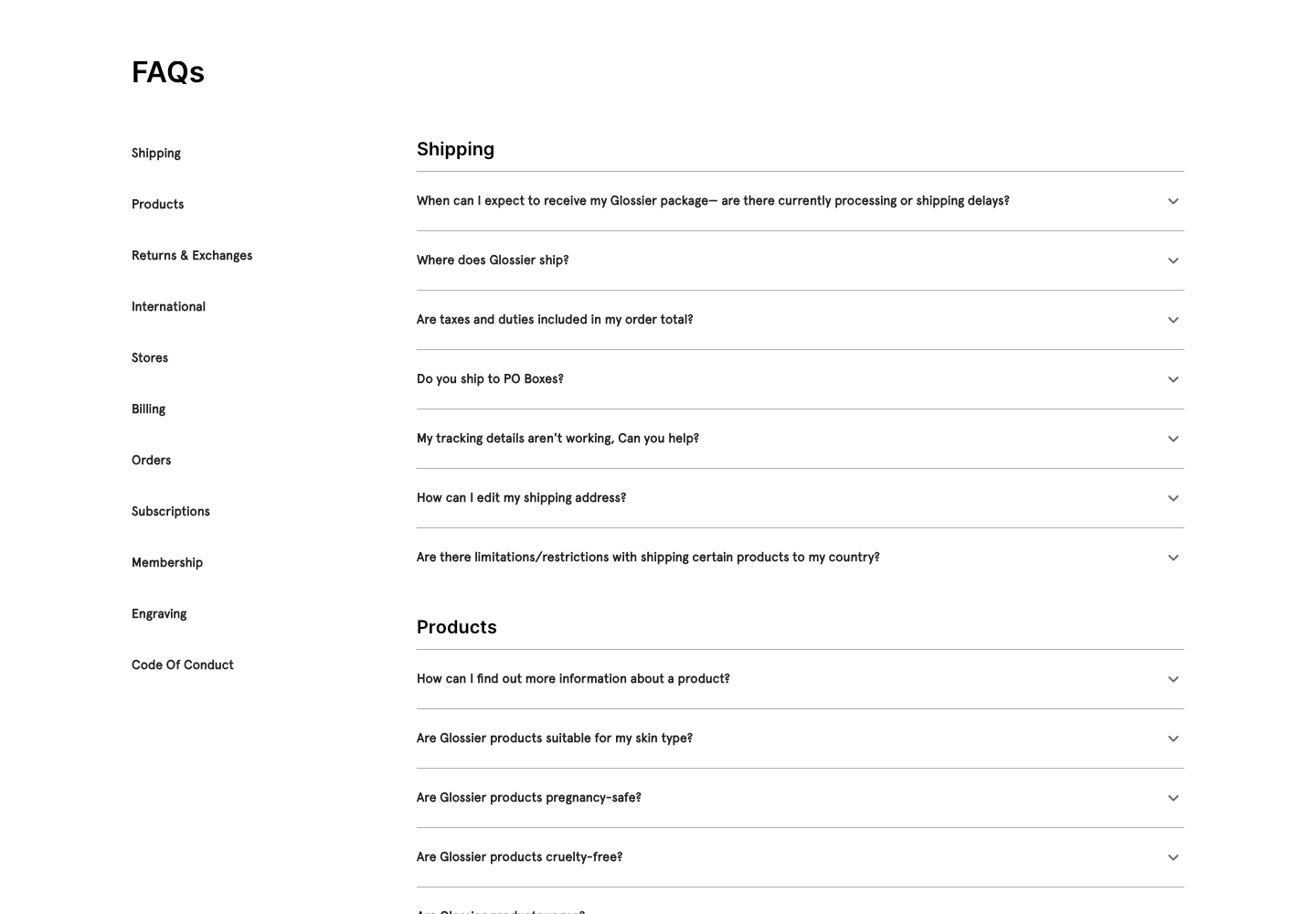
Source: Glossier Help Center
These questions aren't the opposite of product benefits—they're the conditions and failure scenarios customers actually worry about right before buying. The more specific the customer's wording (skin type, pregnancy, authenticity, availability), the clearer the page you need to write becomes.
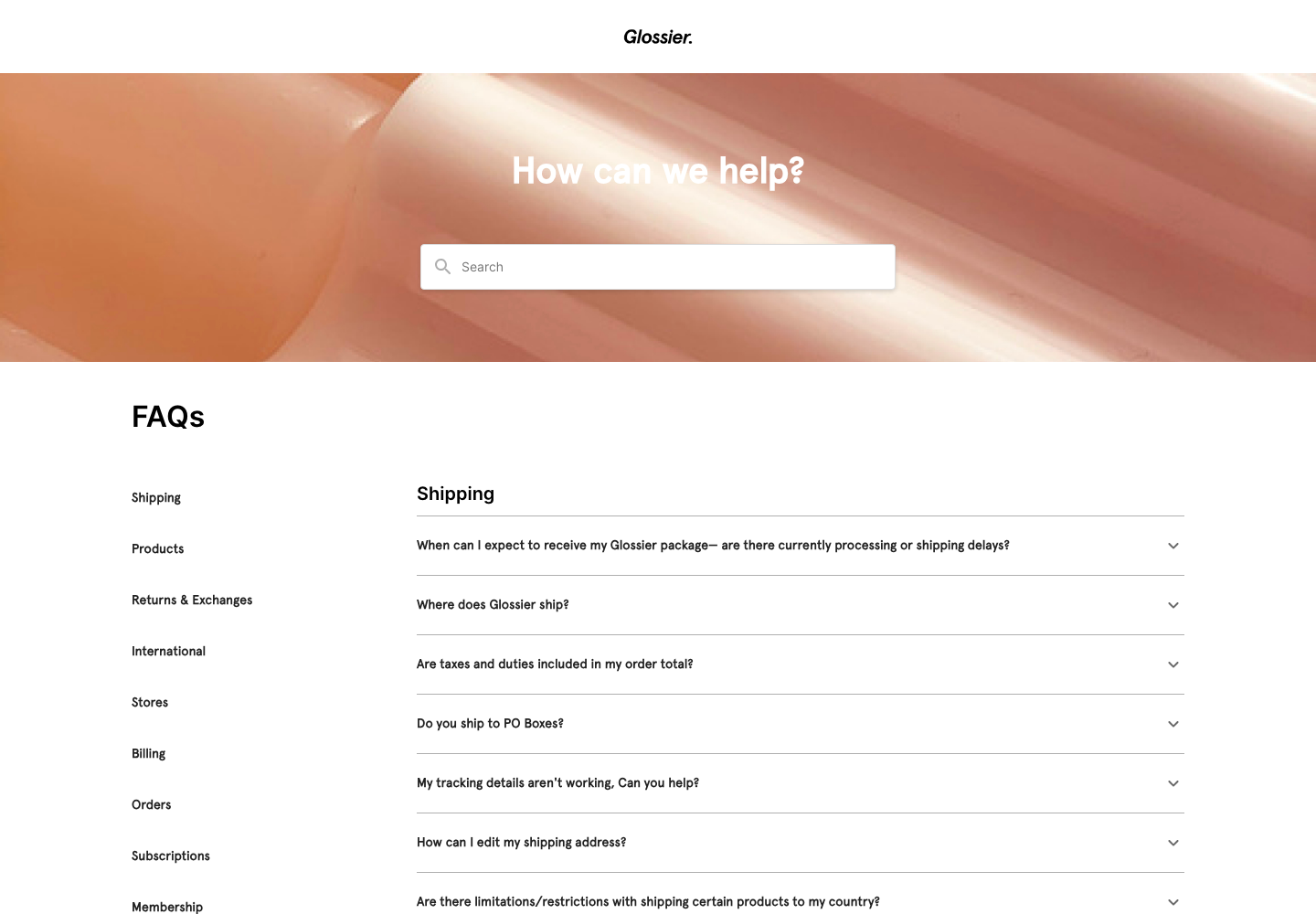
Source: Glossier Help Center
When you look for questions, don't focus on just one product—scan through the sequence selection → payment → shipping → use → troubleshooting. Noticing which stage generates repeat questions makes it easier to pick the one to answer first.
Good content topics don't only come from keyword lists. Customers already give you hints when they hesitate to buy, when they reach out for support, or when they leave a disappointed review.
Once you settle on one question first, the "what should I even write?" feeling fades. The page to answer it, the product details you need, and the product to link all follow naturally.
The question you pick today doesn't need to impress a lot of people—it just needs to be a question that actually helps your customer decide to buy. Skip questions you can't answer confidently for now. Start with the ones where you can give accurate information.
Here's how a customer question turns into a piece of content
Just collecting customer questions as-is isn't content yet. Once you sort out what type of question it is, it's much easier to know where and what to write.
| Customer question | Page to build first | How to start the copy |
|---|---|---|
| "Can I use this product even with sensitive skin?" | Product page or FAQ | "This product can be used if ___. However, if ___, check with us first." |
| "Which is right for me, A or B?" | Comparison/selection guide | "The difference between the two products is ___. A may be a better fit if you ___, and B if you ___." |
| "When will it arrive? Can I exchange it?" | Shipping/exchange FAQ or policy page | "Delivery to ___ usually takes ___ days, and exchanges are available under ___ conditions." |
For SEO: turn the question into your title and opening answer
A question in the customer's actual words makes great material for a title. Just don't repeat it awkwardly over and over. Use the title to signal what the piece answers, give the answer directly in the first paragraph, and then explain conditions, evidence, and next steps.
For example, if a customer asks, "Can I use this every day even with sensitive skin?" the piece could open like this:
Title: Can I use this every day even with sensitive skin?
First answer: This product is designed to be ___ for ___ skin.
Conditions to check: full ingredient list, frequency of use, when to avoid it
Next step: Check the ingredient list and usage instructions on the product page
For GEO: break the answer into easy-to-find parts
AI doesn't process every sentence at once—it needs to be able to find the answer, conditions, and evidence that directly connect to the customer's question. That's why good answers usually follow this order:
- Direct answer — Answer the question briefly, right away.
- Conditions and exceptions — Explain who it's right for and when to be careful.
- Evidence — Link to verifiable facts like ingredient lists, usage instructions, or shipping policy.
- Next step — Point customers to whatever they should check next: the product page, FAQ, or policy page.
This structure doesn't guarantee AI mentions or search visibility. But it does help both customers and search systems understand what question the page is answering.
Let's try this on your own site now
Fill out the question card below.
Day 2 Customer Question Card
Customer who would ask this:________________
The question they'd actually ask:________________
Key product or page to link to this question:________________
Content format to answer it:Product page / FAQ / Comparison-selection guide
Why you picked this question:________________
Don't agonize over finding the perfect question. Today, one candidate—"our brand can genuinely answer this well"—is enough.
If you've done this much, today is enough
- Checked at least one of: customer inquiries, reviews, comments, or product pages.
- Picked one question written in the customer's own words.
- Decided on the product or page to link to that question.
Here's what you'll want to know tomorrow
Now that you've found the customer's question, it's time to look at which pages that customer passes through on the way to buying. Tomorrow, we'll map out how the answer to that question guides the customer toward a purchase.