Day 1. How Well Does AI Actually Understand Our Brand?
AI isn't ignoring your brand—it may just not have enough information to understand your site.
Let's start with this scenario
Your product is solid and your ads are running, but when you ask an AI about your brand, it gives you a garbled description or nothing at all. It's tempting to think, "AI just doesn't know us yet."
But AI doesn't walk into your store and pick up your product. It understands your brand and products based on what's publicly available online—your ecommerce site, your brand's public channels, other webpages. Of these, your ecommerce site is the starting point you can directly fix and control most precisely. Even things your team knows well can go unrecognized by AI if they're hard to find on the site or locked inside images only.
Today, let's use the Bulti Diagnostic Report to see how your site currently reads for the first time.
How does AI actually understand your brand?
For AI to understand your brand, a line like "We make great products" isn't enough. AI needs to find the information customers actually use to make decisions on your pages: what you sell, who it's for, and under what conditions people buy and use it.
This isn't just an AI concern. Customers get confused by the same information gaps and end up delaying a purchase or submitting an inquiry instead. A site that's easy for AI to understand tends to be a site that's easy for customers to evaluate, too.
The Bulti Diagnostic Report isn't a pass/fail scorecard. It's a map showing what's already visible on your site and where explanations are still missing. It's fine if today's results are underwhelming. Knowing where to start is the first real change.
A real example: what AI can read vs. what's missing
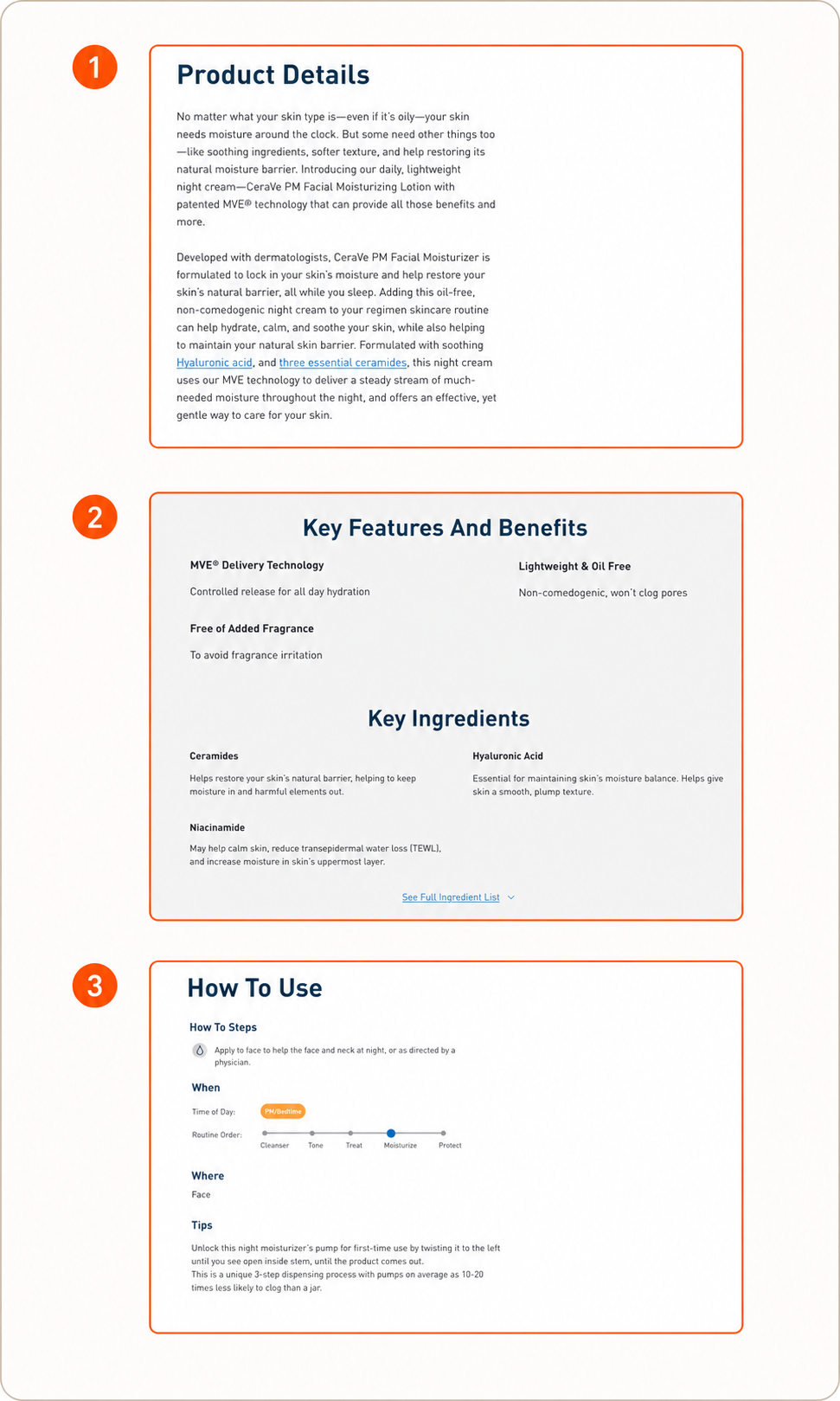
Source: CeraVe PM Facial Moisturizing Lotion
CeraVe's page shows why a product name and tagline are only the beginning. The page separately exposes product details, key ingredients, benefits, timing, and routine order as readable text. In today's diagnostic, look beyond "is the information there or not" and check whether the page supplies enough context for a customer to decide and for AI to describe the product accurately.
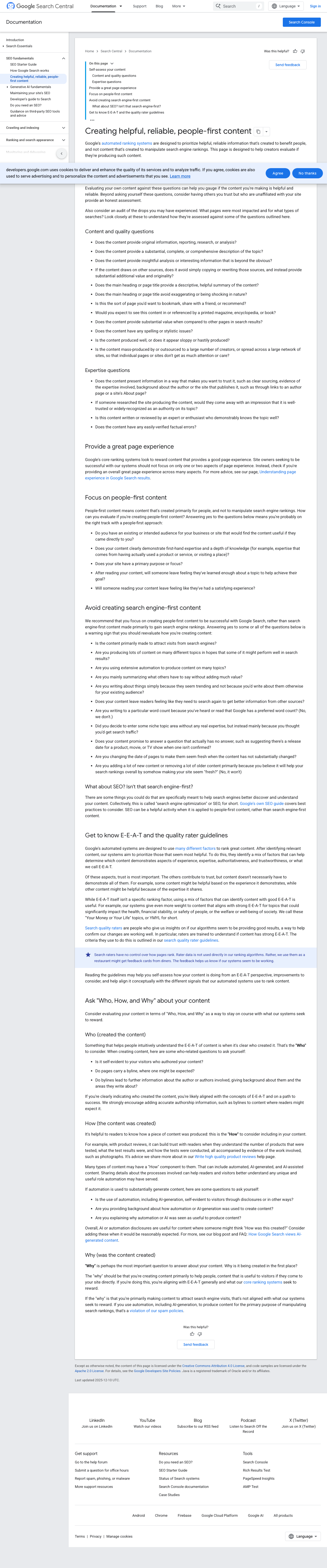
Source: Google's guide to creating helpful, reliable, people-first content
For AI to describe your brand accurately, claims and supporting evidence both need to be verifiable within your official pages. That's why, over the next 60 days, we'll be linking product descriptions, FAQs, and guides back to their original sources.
Which area will we be fixing over the next 60 days?
SEO and GEO work generally fall into two categories: on-page optimization and off-page optimization.
| Area | Definition | Examples an ecommerce marketer typically handles |
|---|---|---|
| On-page optimization | Organizing information on your own site so search, AI, and customers can read it | PDP copy, FAQs, titles, opening paragraphs, internal links, image alt text, structured data, robots.txt, sitemap |
| Off-page optimization | Managing how your brand is mentioned and linked to outside your own site | Backlinks, PR coverage, community mentions, review platforms, affiliate/marketplace listings, social shares |
Both matter. But this 60-day program focuses on on-page optimization. The reason is simple: your ecommerce site is what you can control most directly, and it's the official source of information that both customers and AI need to verify.
Even if your brand gets plenty of off-page mentions, if your official PDPs and FAQs still lack the information customers need to decide, both AI and customers will stay confused. So we start by building, on your own site, a clear answer to: "What do you sell, who is it for, what are the conditions for choosing it, and where can that be verified?"
Most of what we do over the next 60 days falls within this scope: finding customer questions, fixing PDPs and FAQs, building comparison and buying guides, checking internal links and structured data, and later, tracking how those changes show up in traffic, conversion, and revenue. This doesn't mean ignoring external reputation or PR—it means getting your own official pages capable of answering the question first.
What does this look like for your brand?
Open your Bulti Diagnostic Report and work through these three checks:
- What does AI think you sell? Read the brand and flagship product descriptions in the report. Note any mismatched categories, missing flagship products, or awkward descriptions.
- Could a customer actually decide based on that description alone? Compare it to what you'd want to tell a customer directly. Look for missing pieces—who it's for, what makes it different, how to buy or use it.
- What's missing that customers would want to know? Look for one obvious gap in things customers typically ask before buying: flagship products, how to use them, shipping and returns.
You don't need to absorb everything at once. It's enough today to find one thing in the results that makes you think, "Huh, I didn't realize that."
Let's try it on your own site right now
Copy the template below into Notion, a note, or a shared team doc, and fill it in.
Day 1 Diagnostic Notes
Site URL we checked today:________________
How AI currently understands our brand:________________
One piece of customer information we want to fill in first:________________
If possible, save the report link or a screenshot of the first screen too. This isn't about comparing scores later—it's about being able to see how today's discovery actually changed over time.
If you've done this, today is enough
- Opened the Bulti Diagnostic Report and confirmed the site URL analyzed.
- Read through how AI currently describes your brand.
- Recorded one piece of customer information you want to fill in.
Tomorrow, you'll probably be wondering...
Fixing your entire site at once feels overwhelming. Tomorrow, we'll learn how to choose which flagship product page to fix first out of all the products on your site.